 Knjigice
Fairy tale · Classic fairy tales
The Emperor's New Clothes
The story of the emperor who was fooled by two cunning weavers
Also in: Cesarjeva nova oblačila (Slovenian) · Cisárove nové šaty (Slovak)
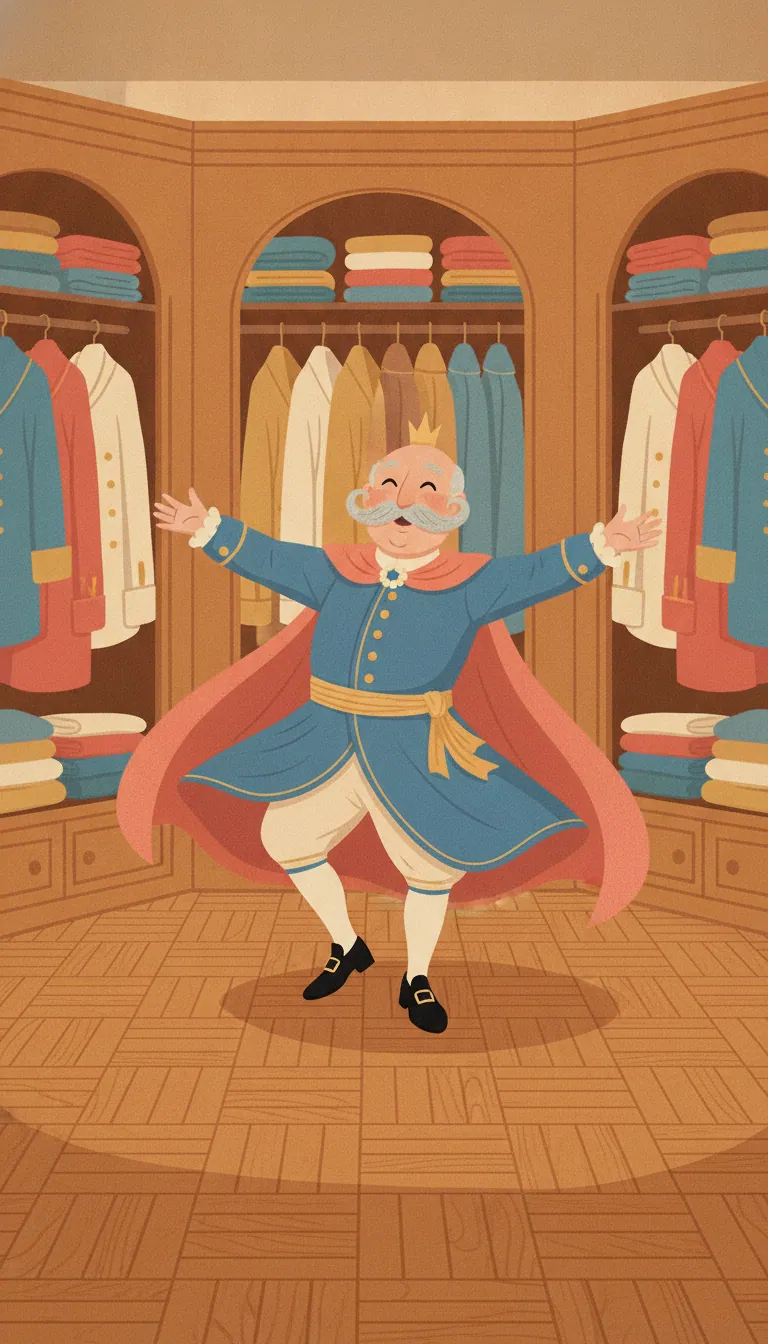
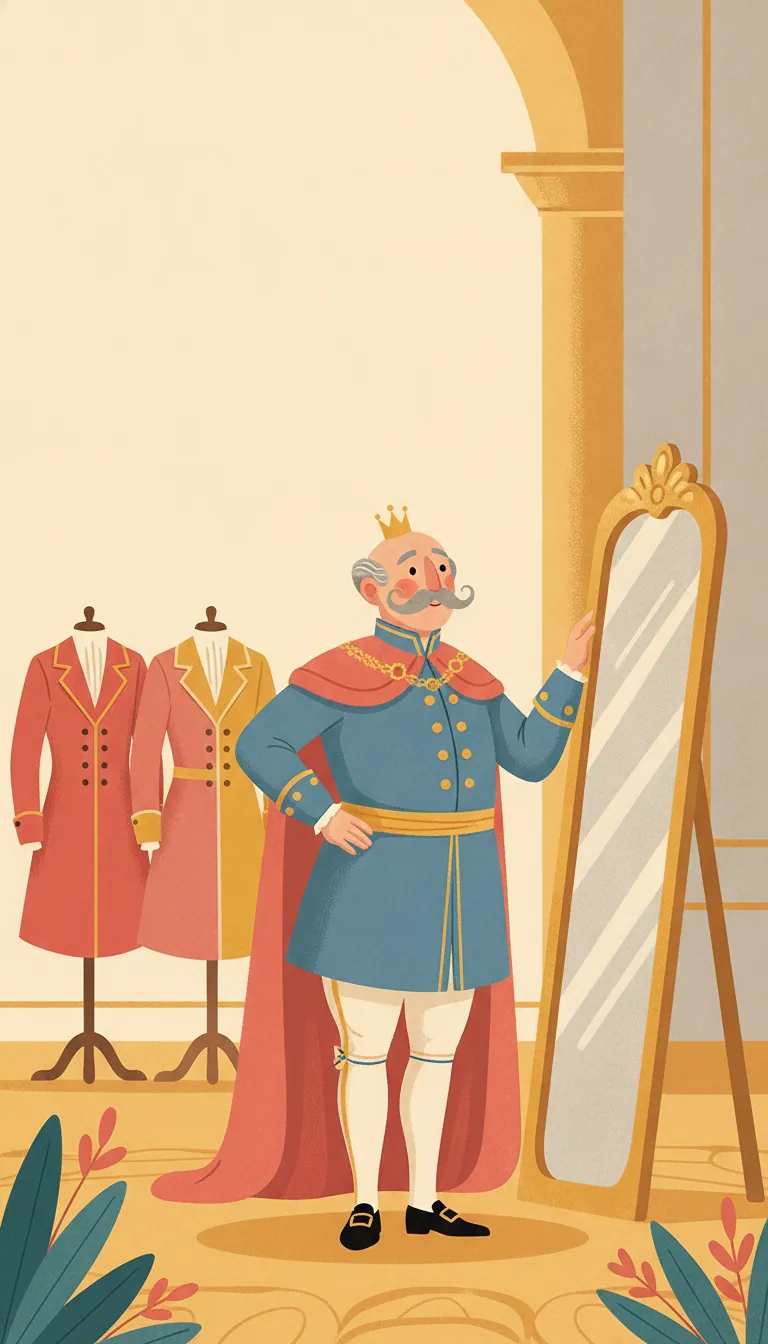
Long ago there lived an emperor who loved new clothes more than anything in the world. He had a different outfit for every hour of the day. He cared nothing for soldiers or the theatre — as long as he could show off his new clothes. Of other kings people say: "The king is in his council chamber," but of him they always said: "The emperor is in his wardrobe."
1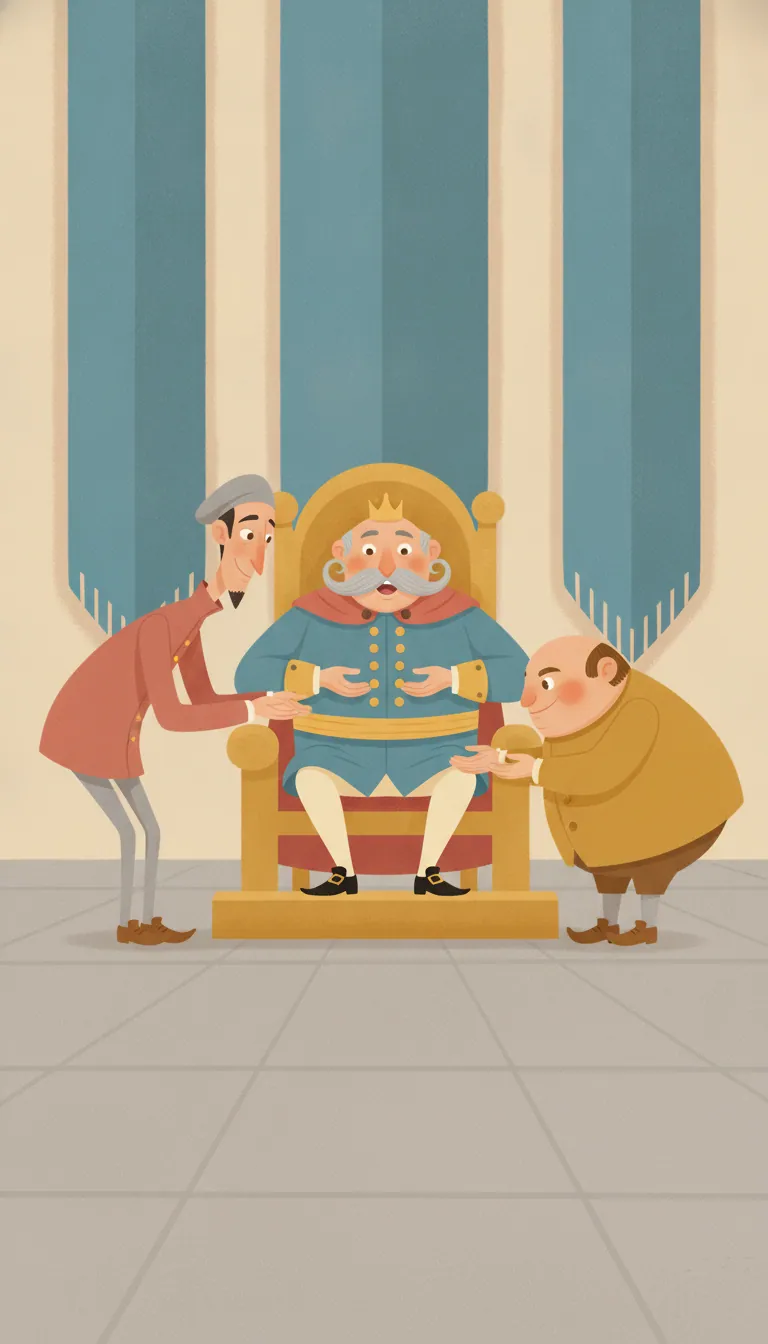
One day two swindlers came to town. They declared they could weave the most beautiful cloth in the world. "Our cloth has a magical property," they said. "It is invisible to anyone who is unfit for his post, or hopelessly stupid." "Excellent!" thought the emperor. "With clothes like that, I would know at once who in my empire is not fit for his job!"
2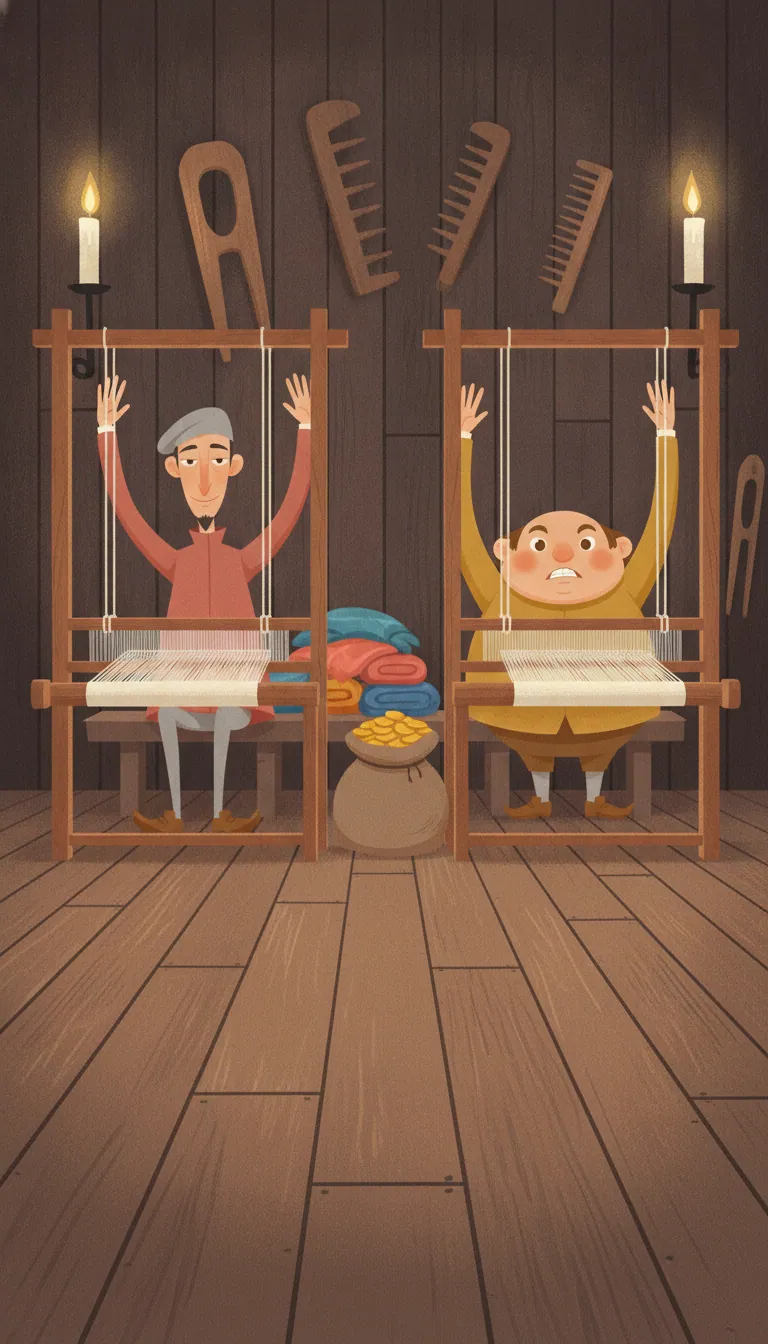
The emperor gave the swindlers a full purse of money, the finest silk and golden thread. But they hid the silk and gold in their bags and set up two great looms. Late into the night they sat at them, waving their hands as if they were weaving. They demanded more silk and more gold — and it all went straight into their bags. Yet on the looms there was not one single thread.
3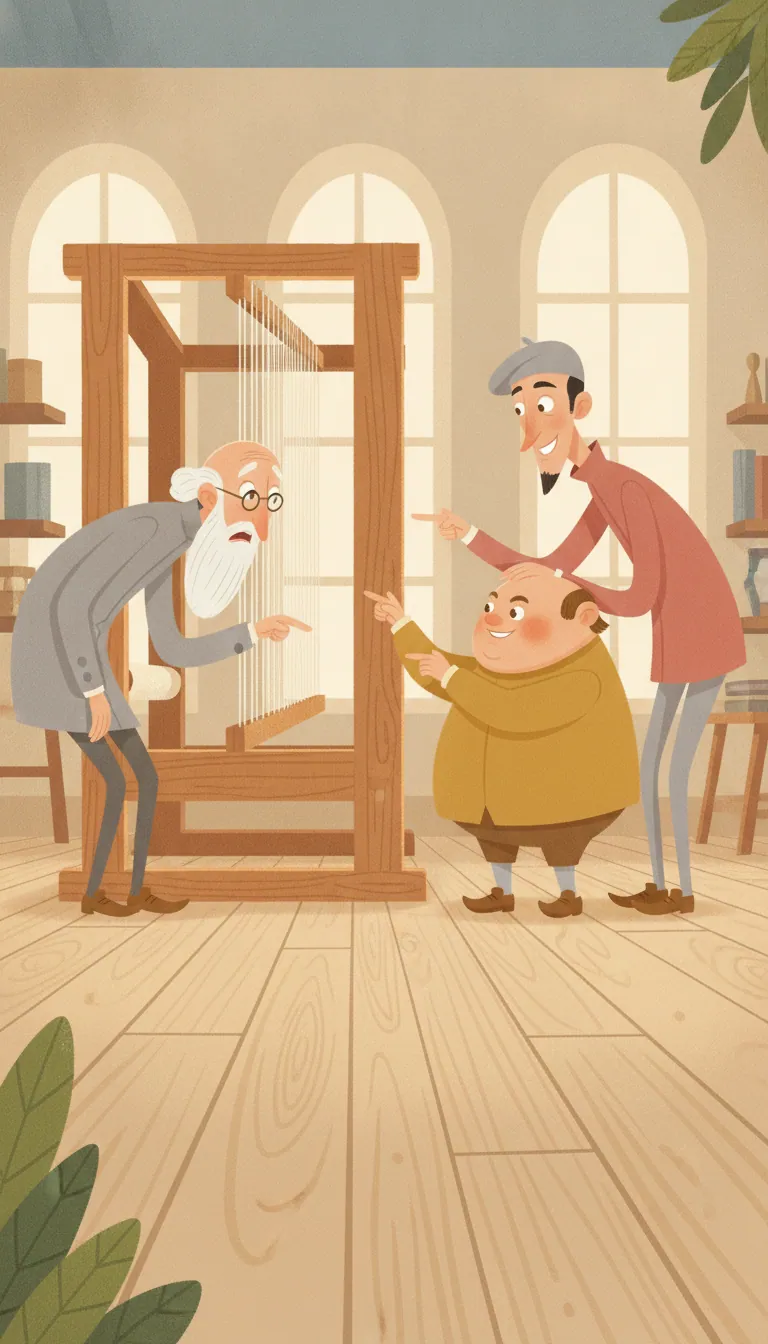
"I should like to know how my cloth is coming along," said the emperor, and sent his honest old minister to the weavers. The minister looked and looked, but saw nothing at all — for there was nothing to see. "Oh dear," he thought in fright, "am I stupid? No one must ever find out!" So he said aloud: "Magnificent! What patterns, what colours! I shall tell the emperor I like it very much indeed."
4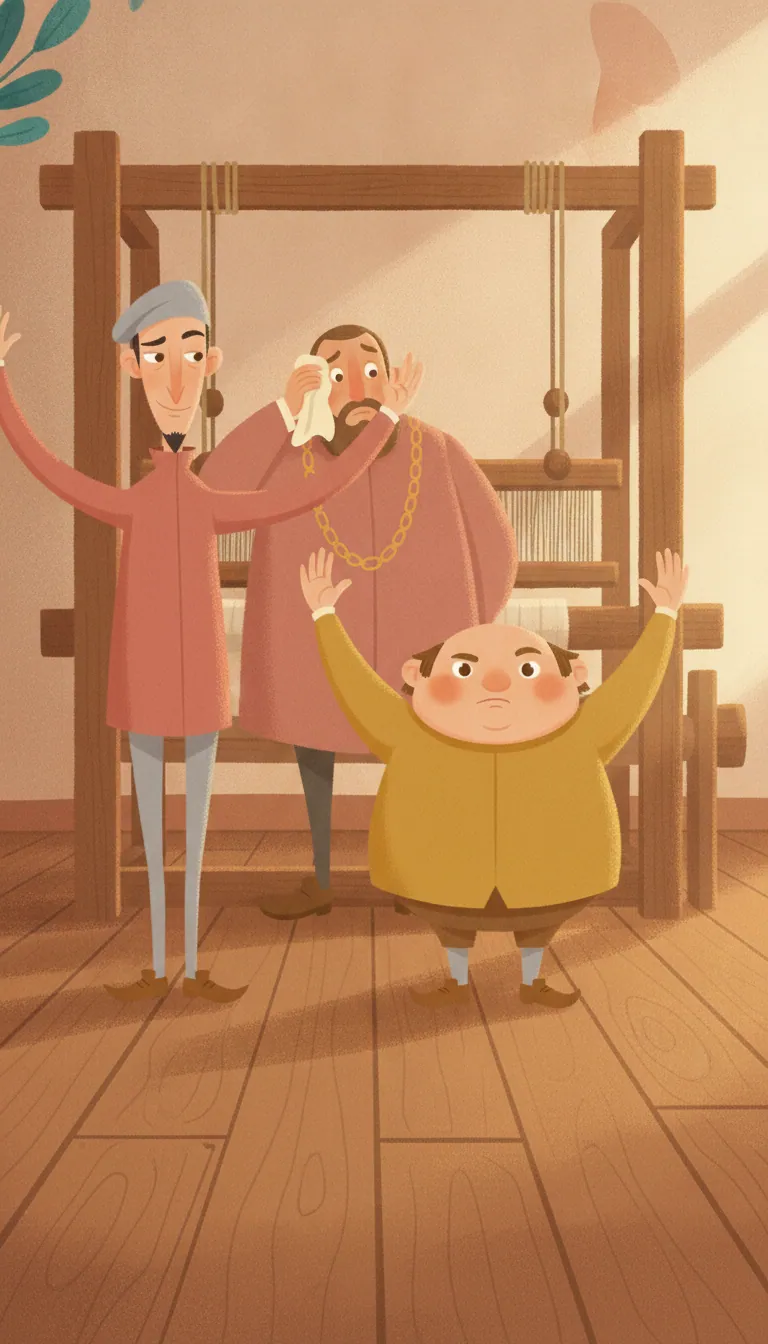
Soon the emperor sent another faithful official. He too stared at the empty looms and saw — nothing. "I am certainly not stupid," he reasoned. "Then I suppose I am not fit for my post. Nobody must notice!" And he praised the cloth he could not see: "How fine, how wonderful!" Soon the whole town was talking of nothing but the marvellous fabric.
5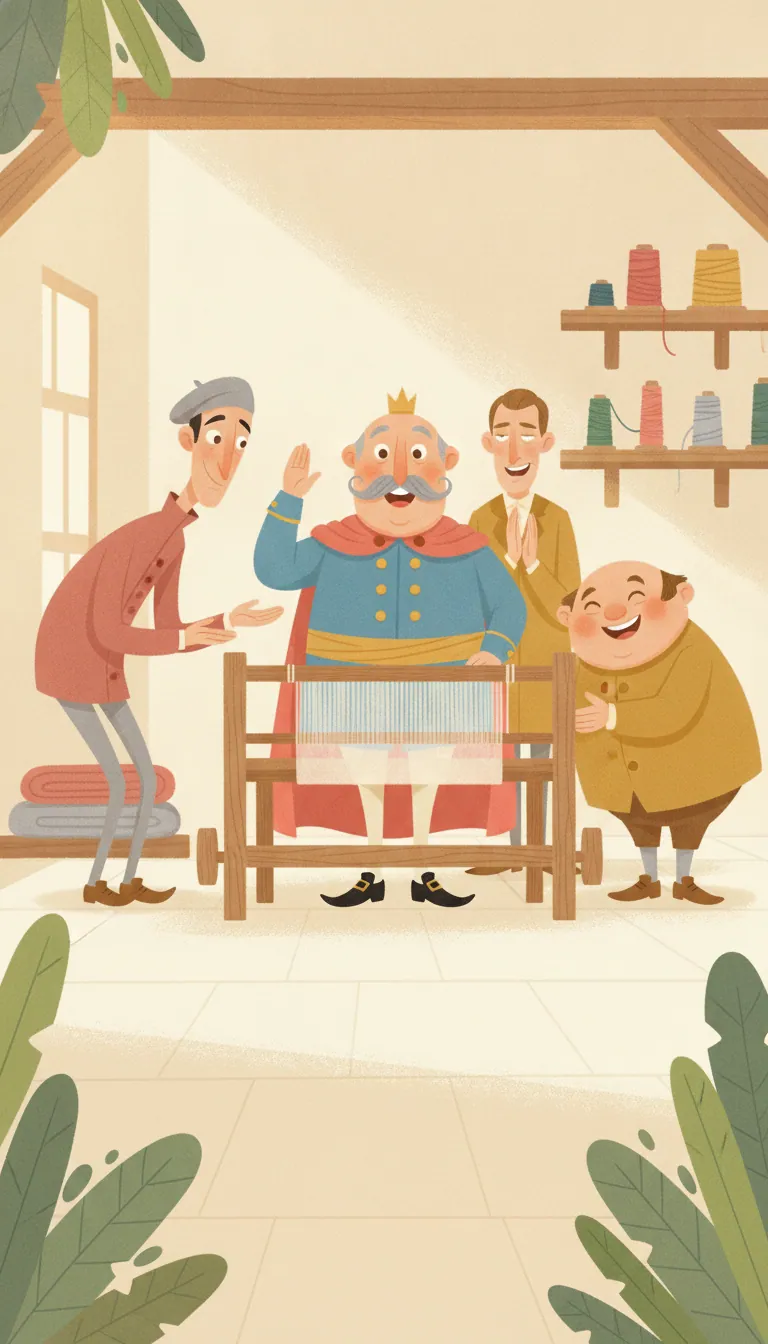
At last the emperor wished to see the cloth for himself. With a crowd of chosen courtiers he stepped up to the looms, where the swindlers were weaving away — without a single thread. The emperor looked and looked and saw nothing. "What?" he thought in horror. "Am I stupid? Am I not fit to be emperor? Nothing worse could happen to me!" So he said: "Oh, how beautiful! Most imperial!" And all the courtiers nodded: "Beautiful, Your Majesty!"
6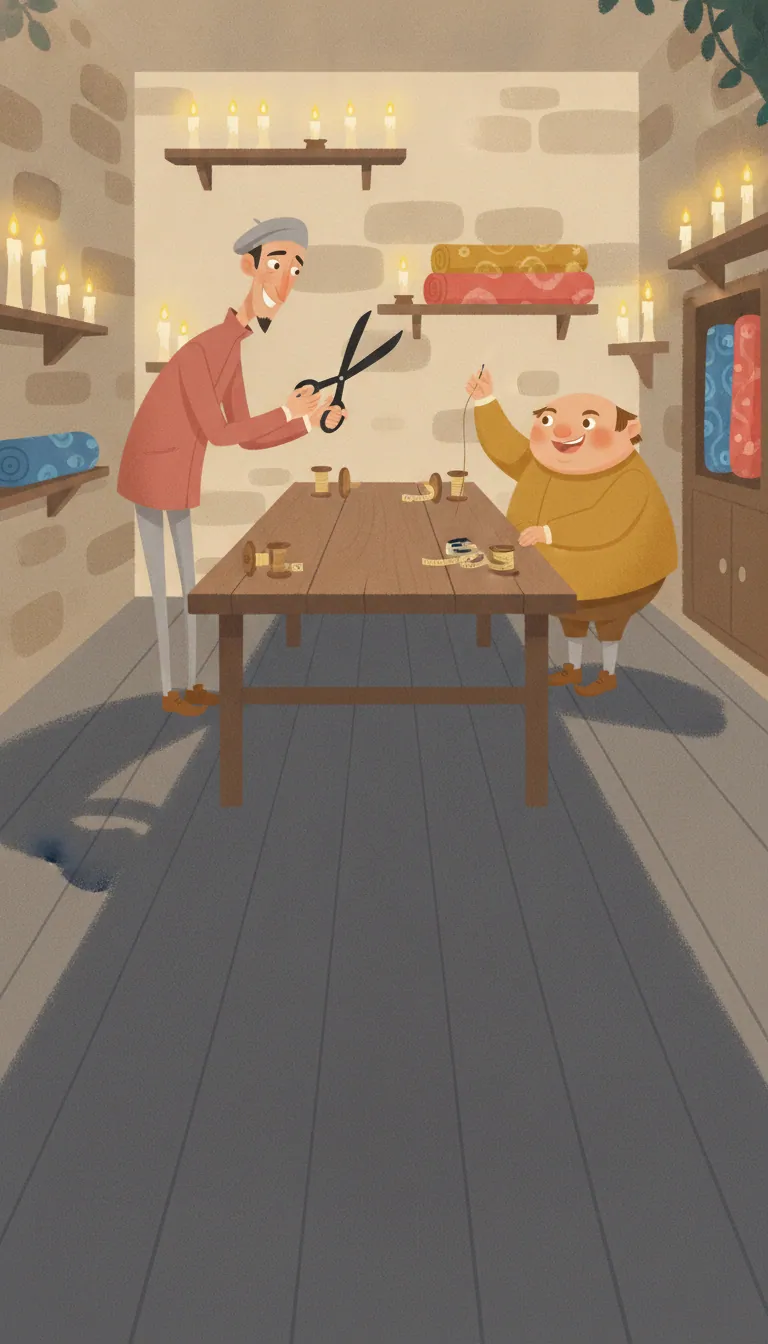
All night before the great procession the swindlers sat up by sixteen candles, so everyone could see how hard they were working to finish the emperor's new clothes. People in the street saw the light and said: "Look how busy they are!" They cut the air with great scissors, sewed with a needle and no thread, and at last announced solemnly: "Behold — the emperor's new clothes are ready!"
7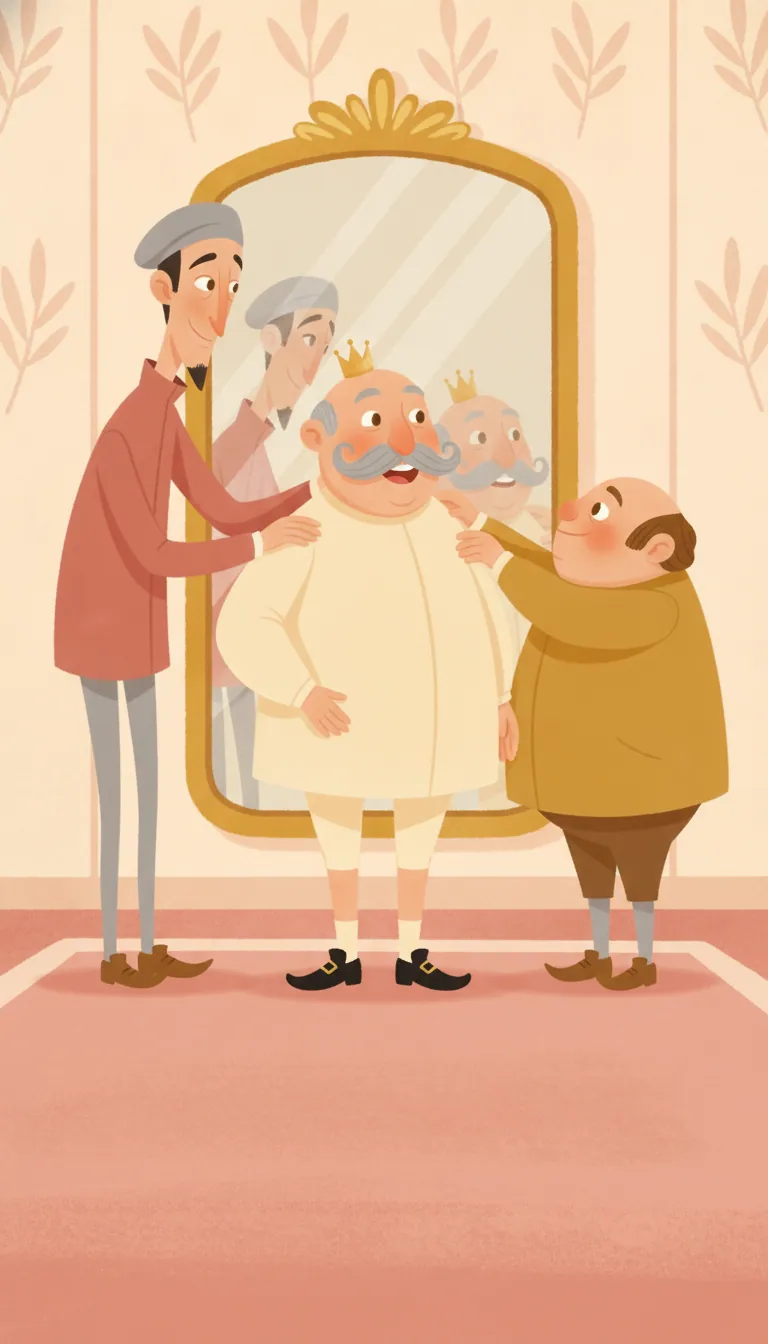
"If you please, Your Majesty: the trousers, the coat, the cloak!" said the swindlers, holding up their hands as if carrying something. "All as light as cobweb — you might think you had nothing on at all, but that is the very beauty of it!" The emperor laid aside his clothes, and the swindlers dressed him piece by pretend piece. Before the great mirror he turned and twirled. "How splendidly it fits!" cried the courtiers.
8
And so the emperor walked in the procession under a splendid canopy. The chamberlains walked behind him, carrying the train that was not there. All the people in the streets and at the windows cried: "How wonderful the emperor's new clothes are! What a train, what a fit!" No one would admit he saw nothing — for that would mean he was stupid, or not fit for his post.
9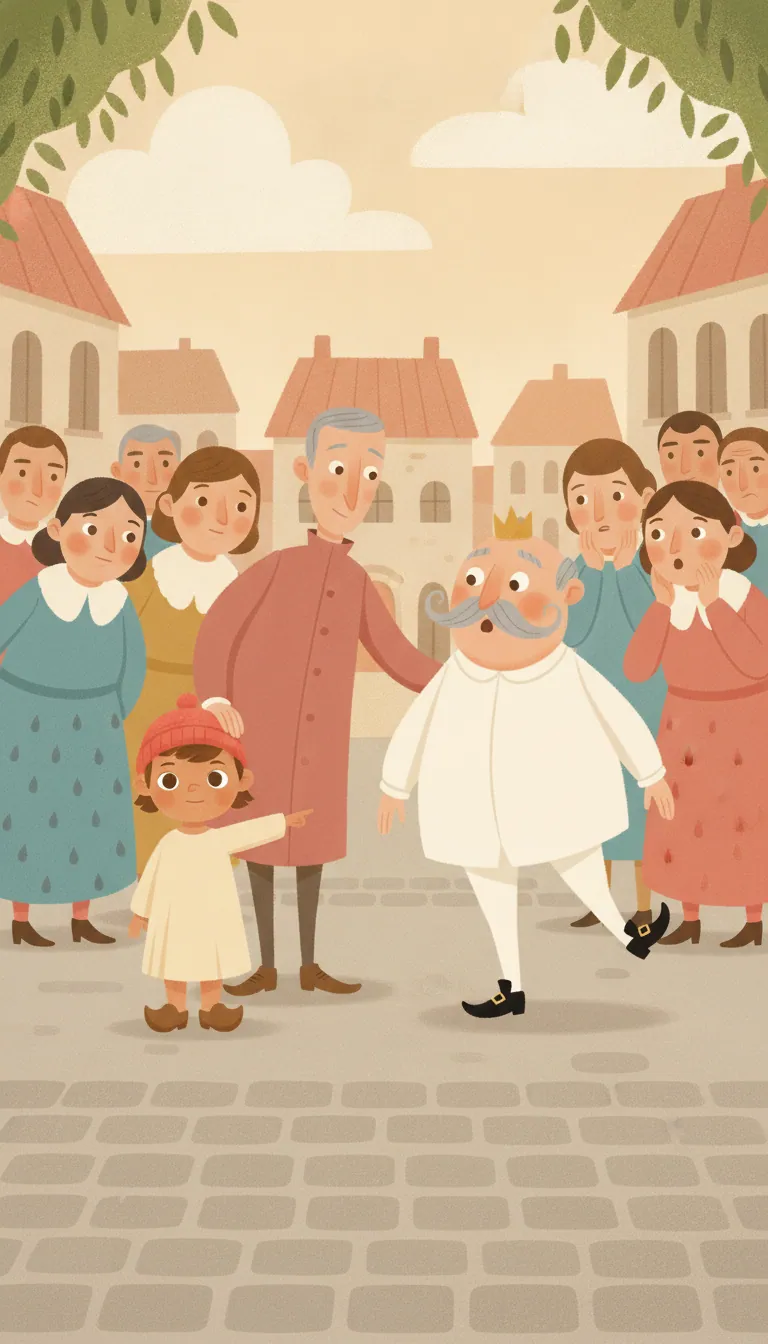
Then a little child in a red cap spoke up: "But he has nothing on at all!" — "Dear me, listen to the voice of an innocent child!" said its father. And a whisper went from mouth to mouth: "The child says he has nothing on …" Until at last all the people cried out: "But he has nothing on at all!" And the emperor heard every word.
10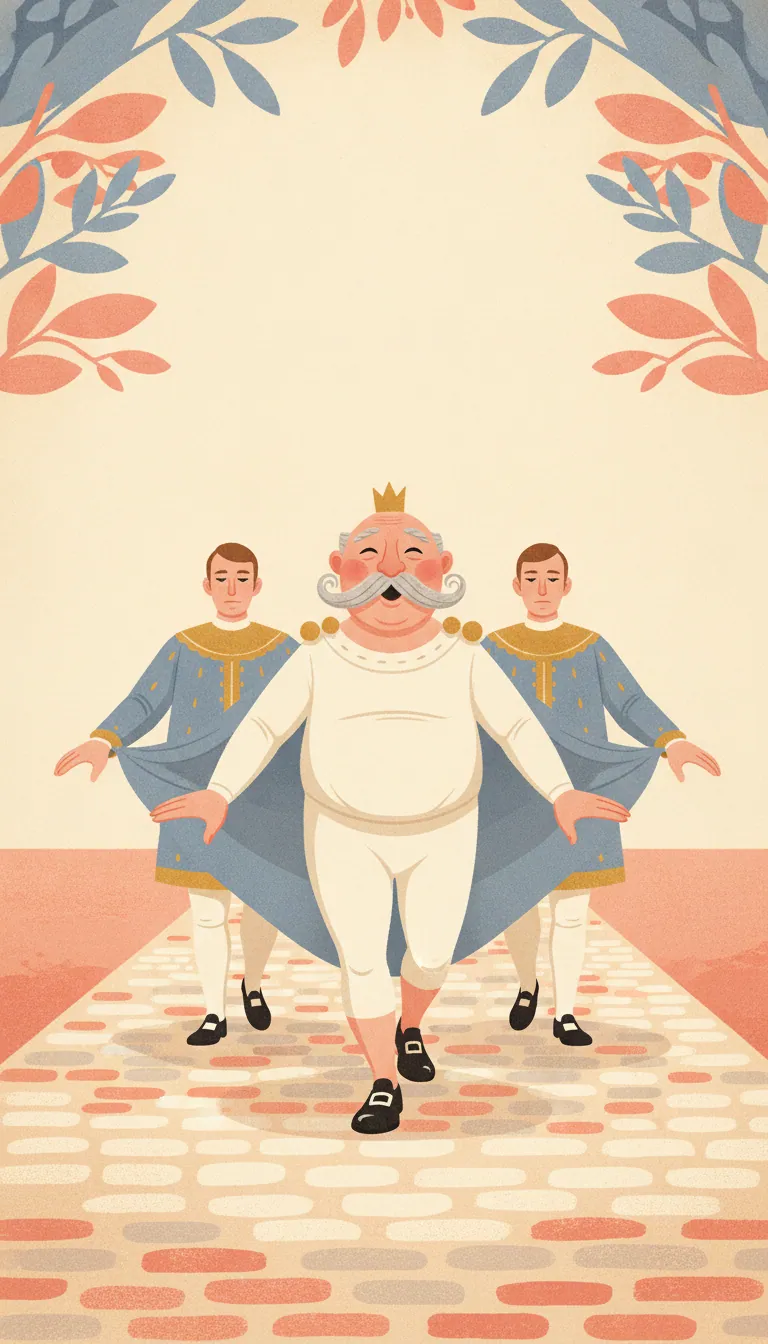
A shiver ran through the emperor, for it seemed to him that the people were right. But he thought: "Now I must hold out until the procession is over." So he drew himself up and, head held high, walked on prouder than ever. And the chamberlains walked behind him, solemnly carrying the train — the train that was not there at all.
11The End