 Knjigice
Fairy tale · Classic fairy tales
The Steadfast Tin Soldier
Andersen's tale of the one-legged soldier and the little dancer
Also in: Stanovitni kositrni vojak (Slovenian) · Statočný cínový vojačik (Slovak)
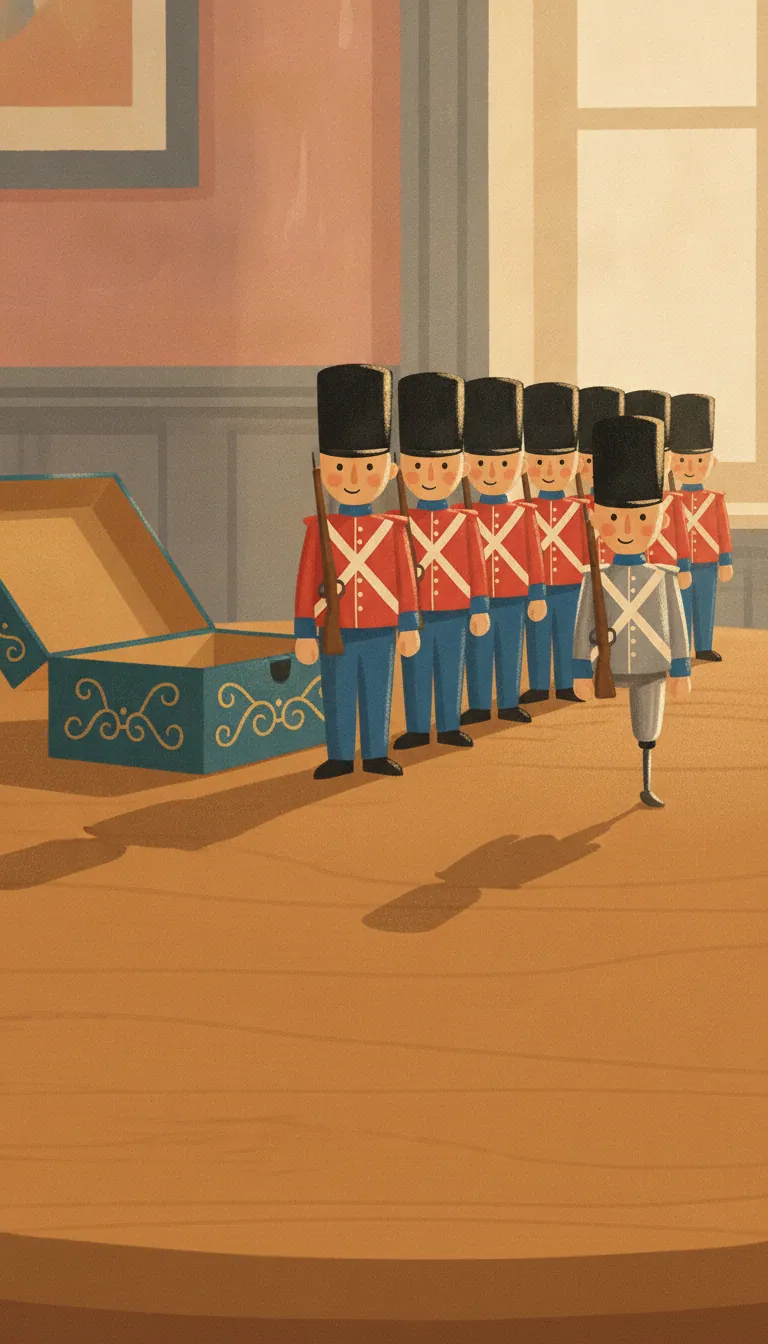
Once upon a time there were twenty-five tin soldiers, all brothers, cast from one old tin spoon. Muskets on their shoulders, heads high, red-and-blue uniforms — alike as drops of water. Only the last was cast at the very end, when the tin ran short, so he had just one leg. But he stood on it as firmly as the others on two. And he is the one to remember.
1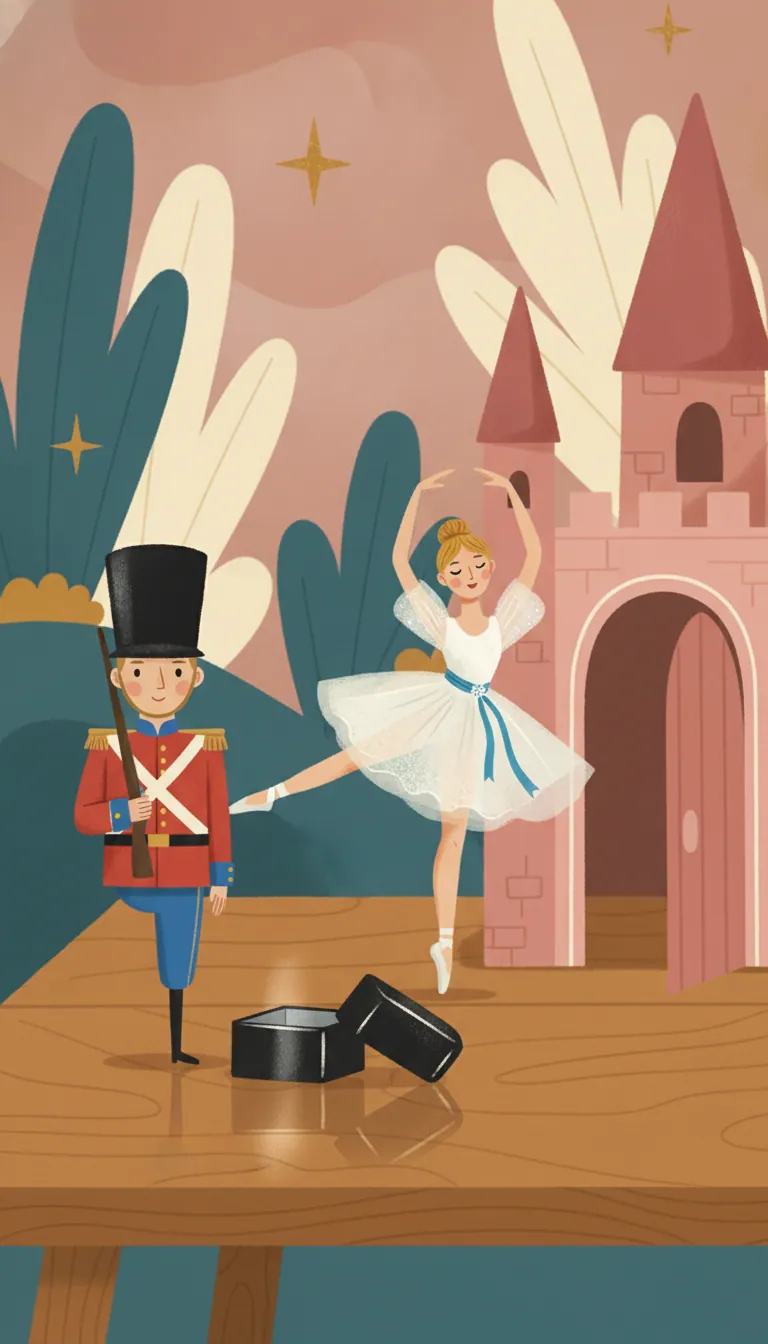
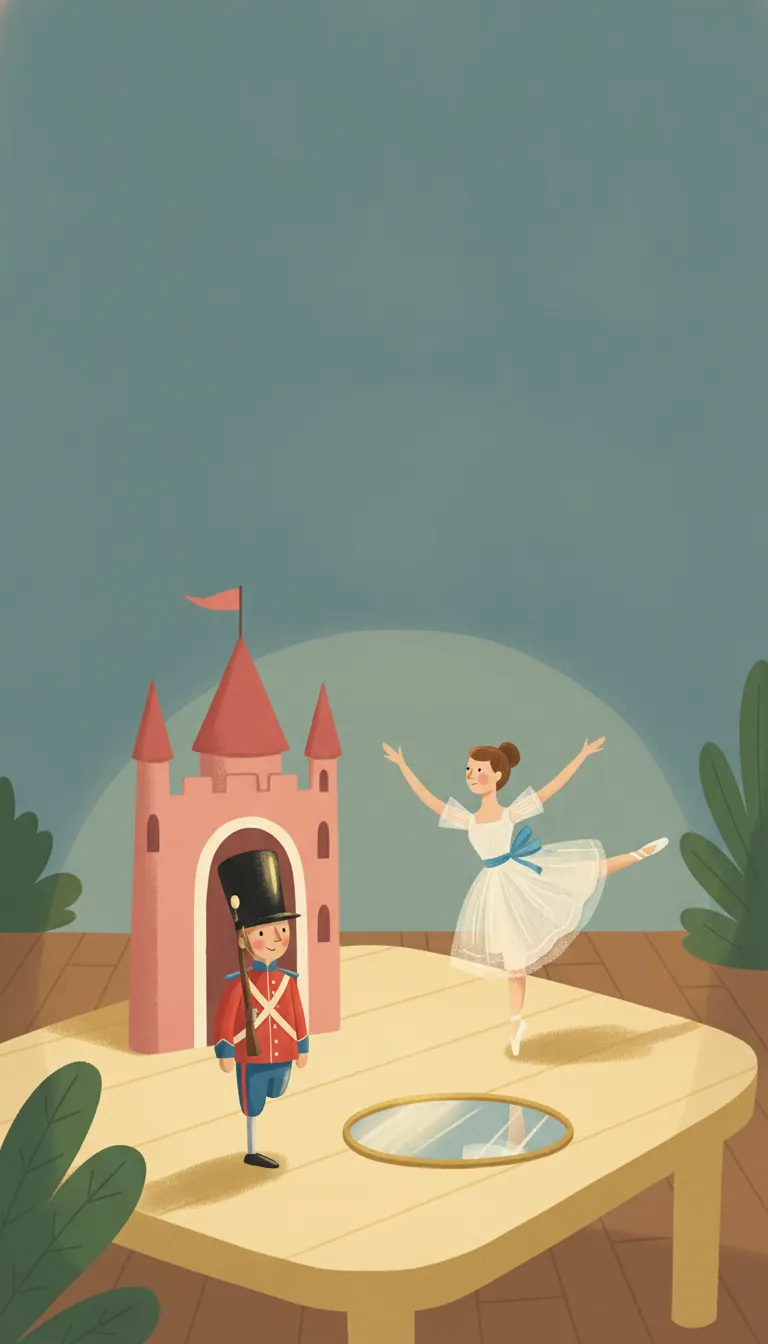
On the table where the soldiers stood there was also a fine paper castle. At its door stood a little dancer, made of paper too, in a white dress with a sky-blue ribbon and a shining spangle on it. She had raised one leg so high that the soldier could not see it at all. "She has only one leg — just like me!" he thought. "She would be the wife for me." And he never took his eyes off her again.
2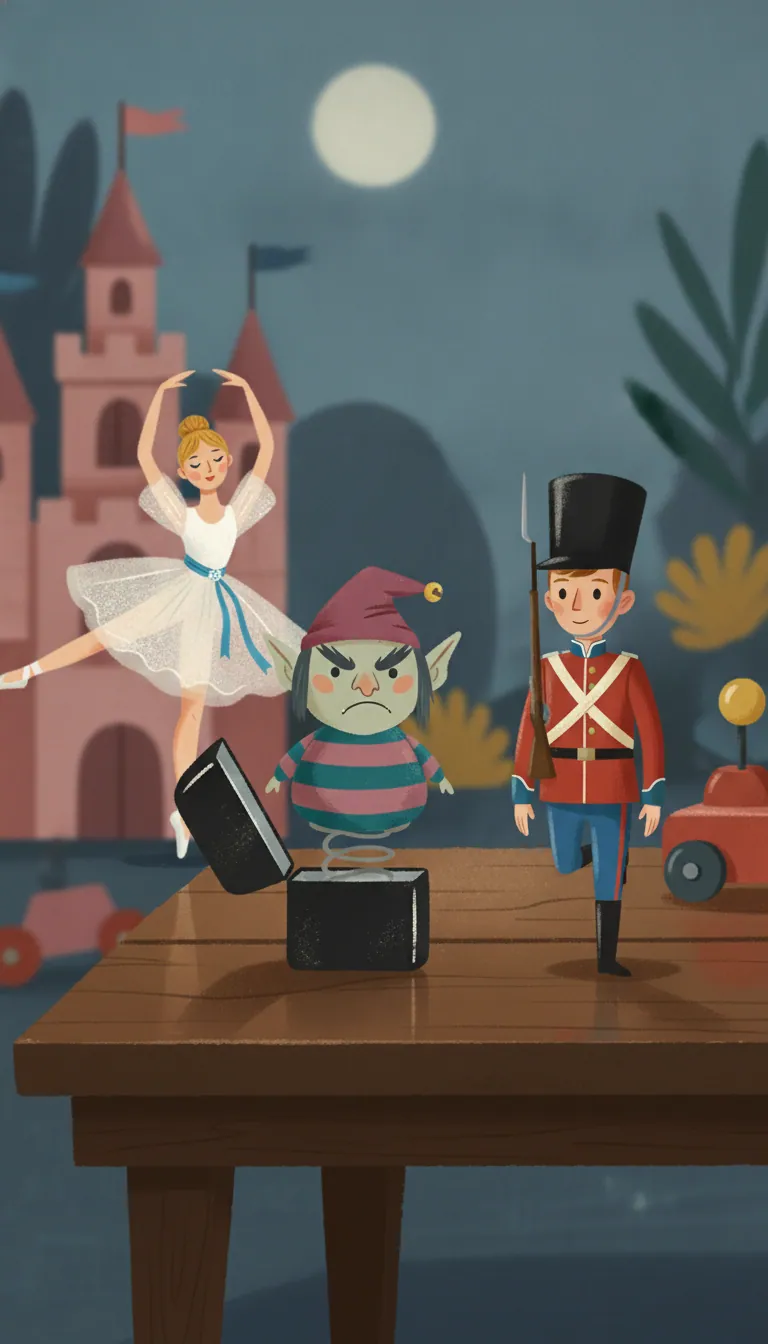
In the evening, when the children were asleep, the toys on the table woke up. They paid visits, danced and played chase — only the tin soldier and the dancer stayed in their places, quietly looking at each other. When the clock struck midnight, a goblin sprang out of the black box. "Tin soldier!" he called. "Keep your eyes to yourself!" But the soldier did not stir. "Just you wait until tomorrow!" grumbled the goblin.
3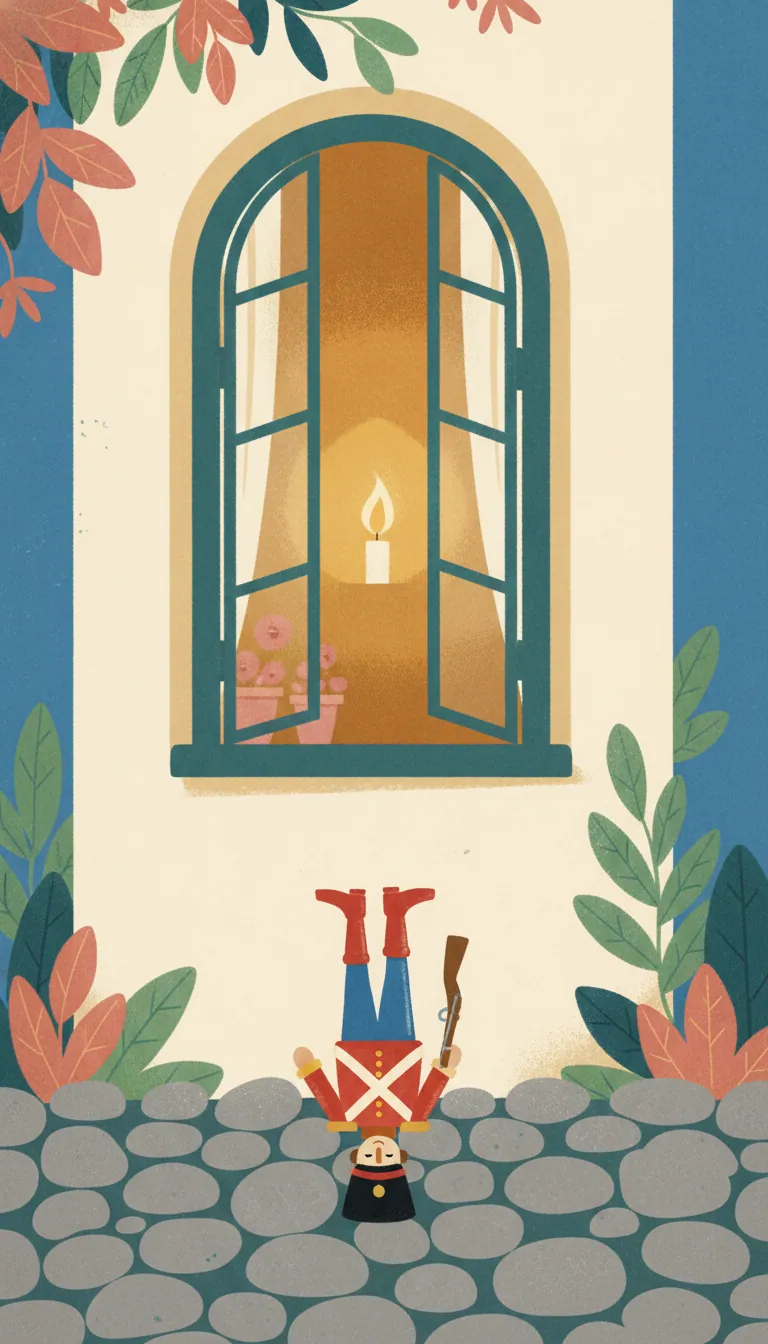
In the morning the soldier was set on the windowsill. And look — perhaps it was the goblin, perhaps a draught — the window flew open and the soldier tumbled from the third floor. He landed head-first between the cobblestones, his one leg pointing at the sky. The children searched and nearly stepped on him, yet never saw him. He could have called: "Here I am!" — but shouting did not seem proper in uniform.
4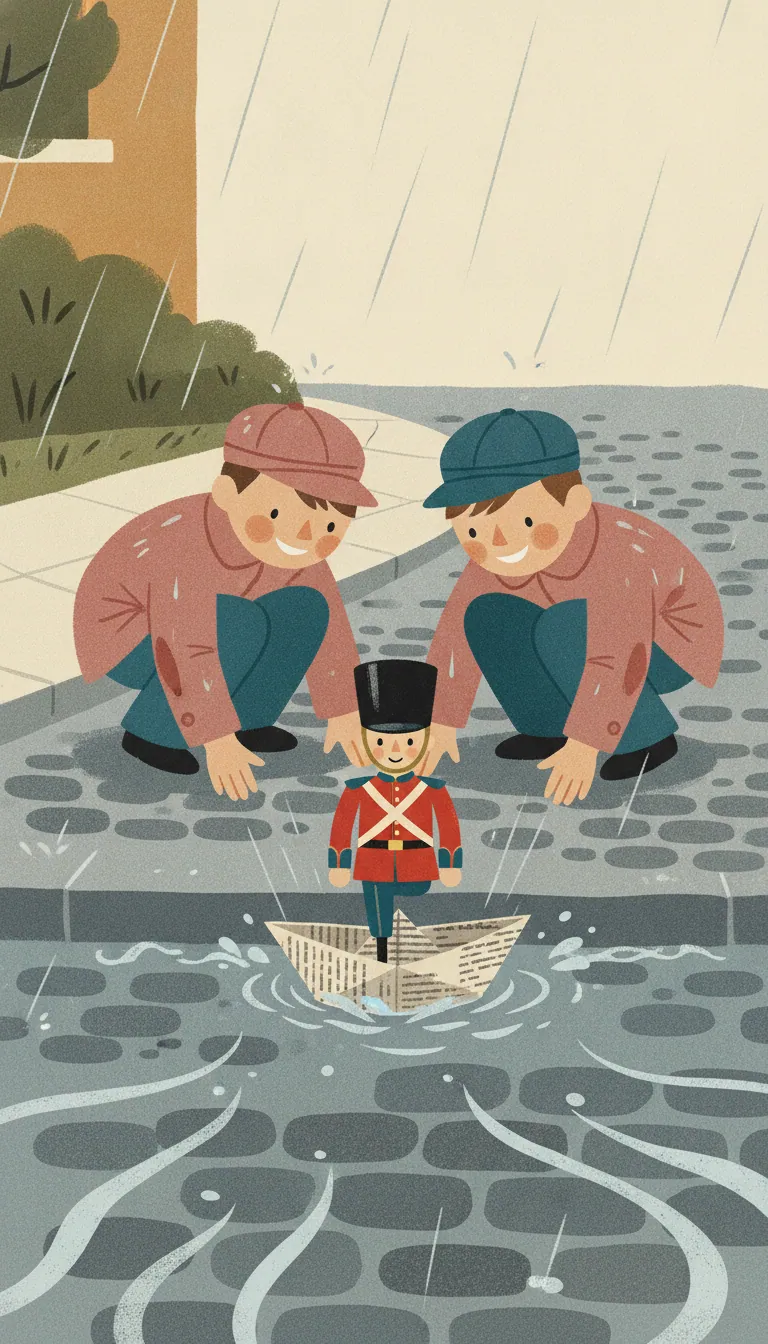
Then it began to rain. The drops fell thicker and thicker until it poured as if from a bucket. When the storm was over, two street boys came running by. "Look, a tin soldier!" said the first. They folded a boat out of old newspaper, set the soldier in it and sent it down the stream at the edge of the road. The water raced, the boat danced on the waves — but the soldier stood firm and looked straight ahead.
5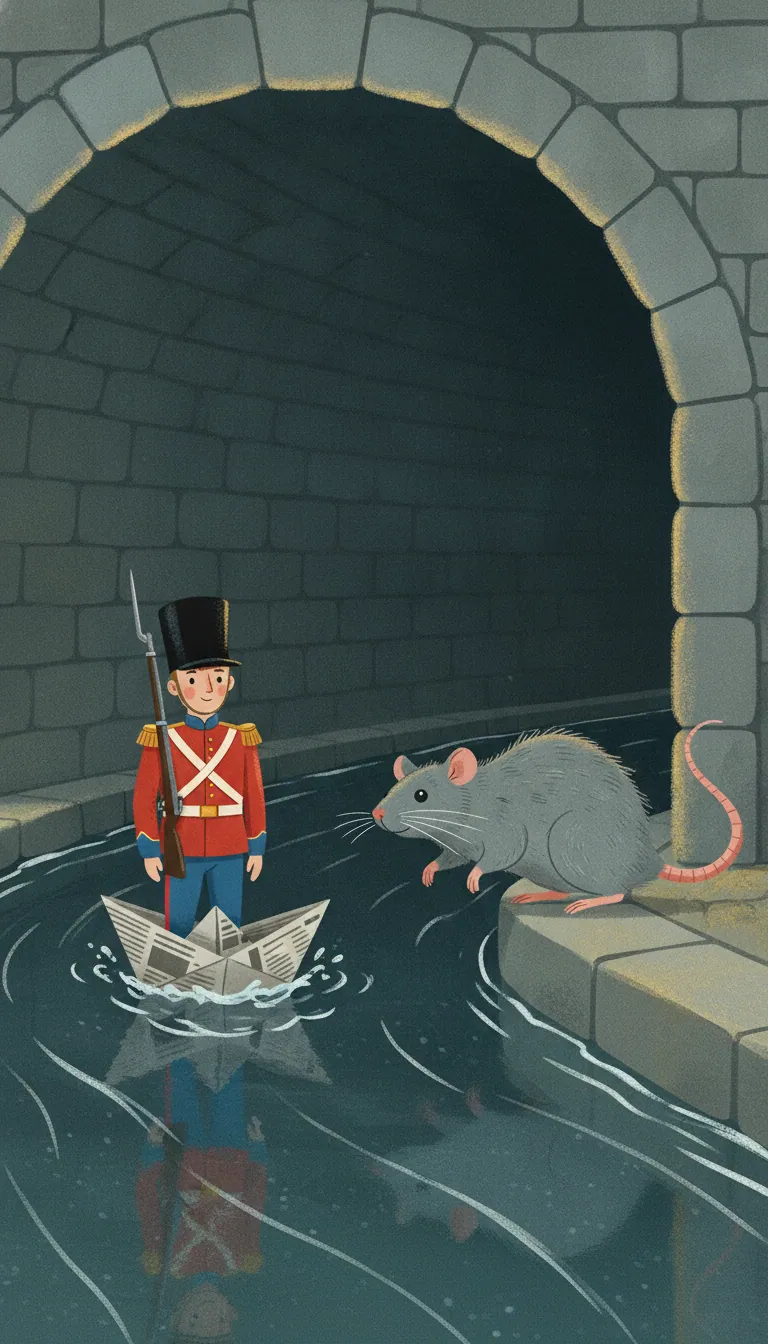
The water carried the boat into a dark tunnel under the street. It was as dark there as in the soldier's box. "Who goes there?" squeaked a big grey rat. "Passport! Show your passport!" But the water ran too fast. The rat chased the boat, shouting: "Stop him! He has not shown his passport!" The soldier stood still, musket on his shoulder, and said nothing.
6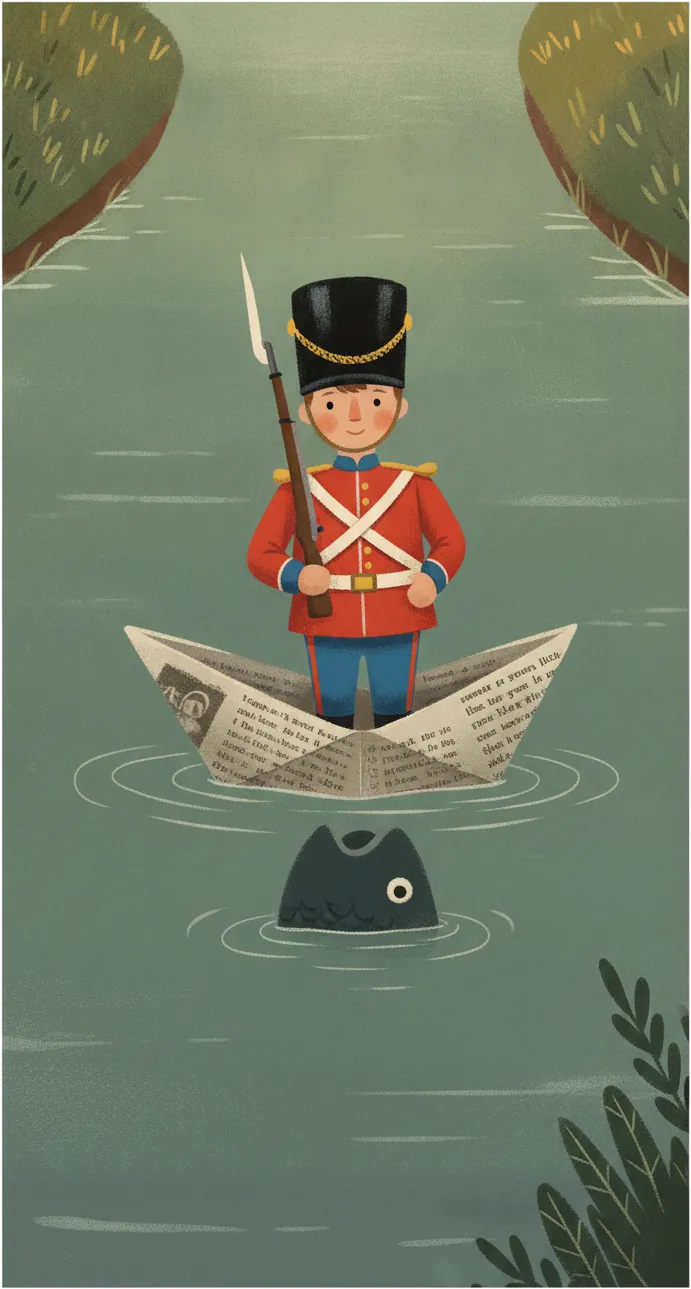
The tunnel ended and the water plunged into a wide canal. The boat spun round, drank in water and began to sink. The soldier stood upright to the last — let no one say he so much as blinked. He thought of the little dancer he would never see again. Then the paper fell apart, the soldier went under — and at that very moment a great fish swallowed him.
7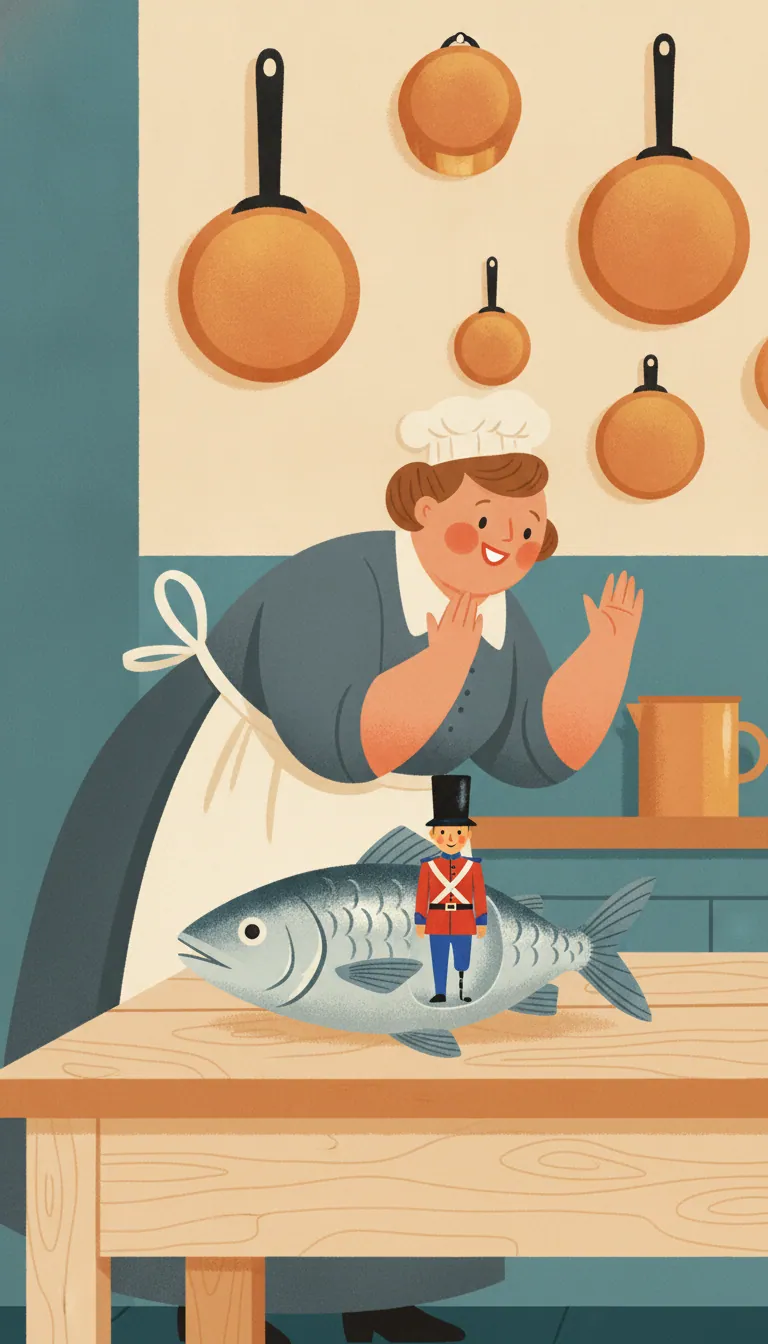
Inside the fish it was even darker than in the tunnel, and very cramped. But the soldier lay still, musket on his shoulder, and waited. The fish darted this way and that, then all at once lay quiet. Light flashed through the dark, and someone cried: "The tin soldier!" The fish had been caught, carried to market and sold — and in the kitchen the cook had opened it with a big knife.
8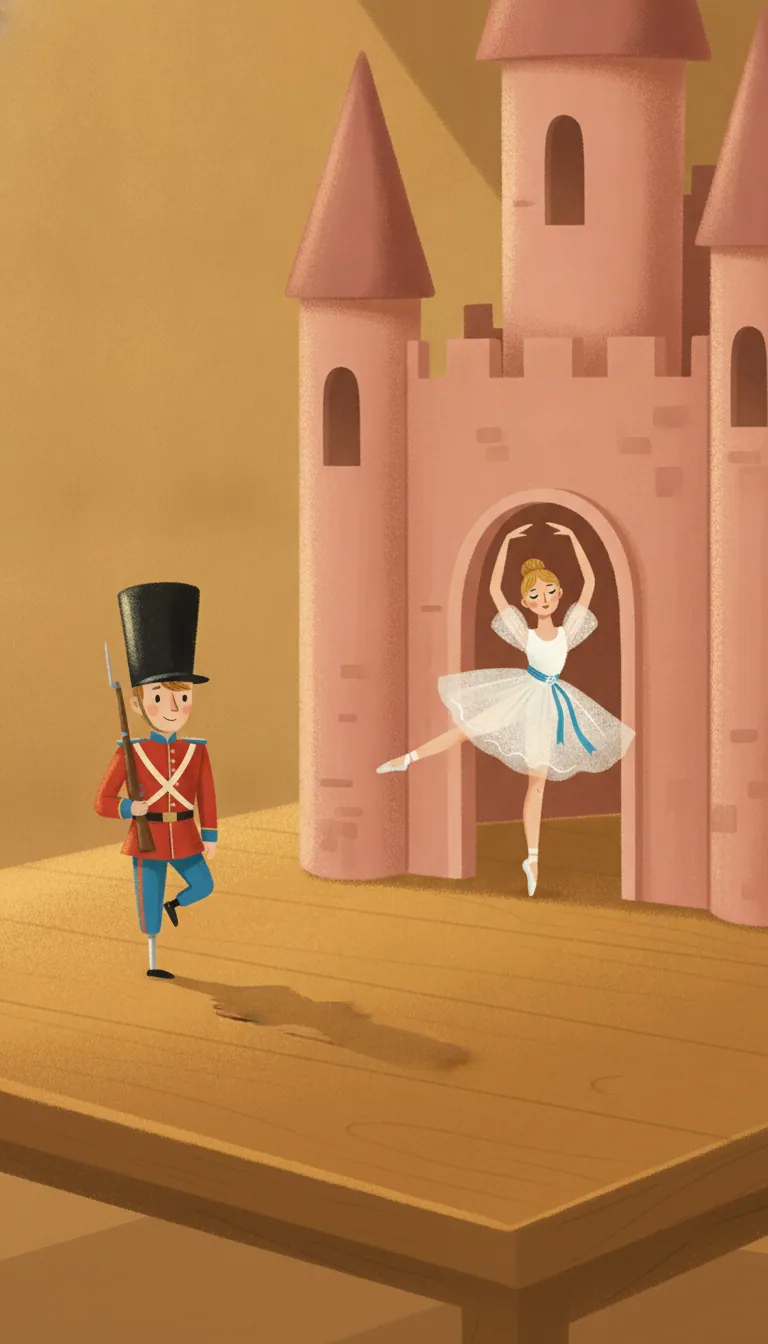
The cook picked the soldier up with two fingers and carried him into the parlour, so everyone could see the strange traveller from the fish's belly. And would you believe it — he was in the very same room as before! The same children, the same paper castle, and at its door the little dancer, still on one leg. His heart squeezed with joy. He could almost have wept tin tears — but that would not be proper in uniform.
9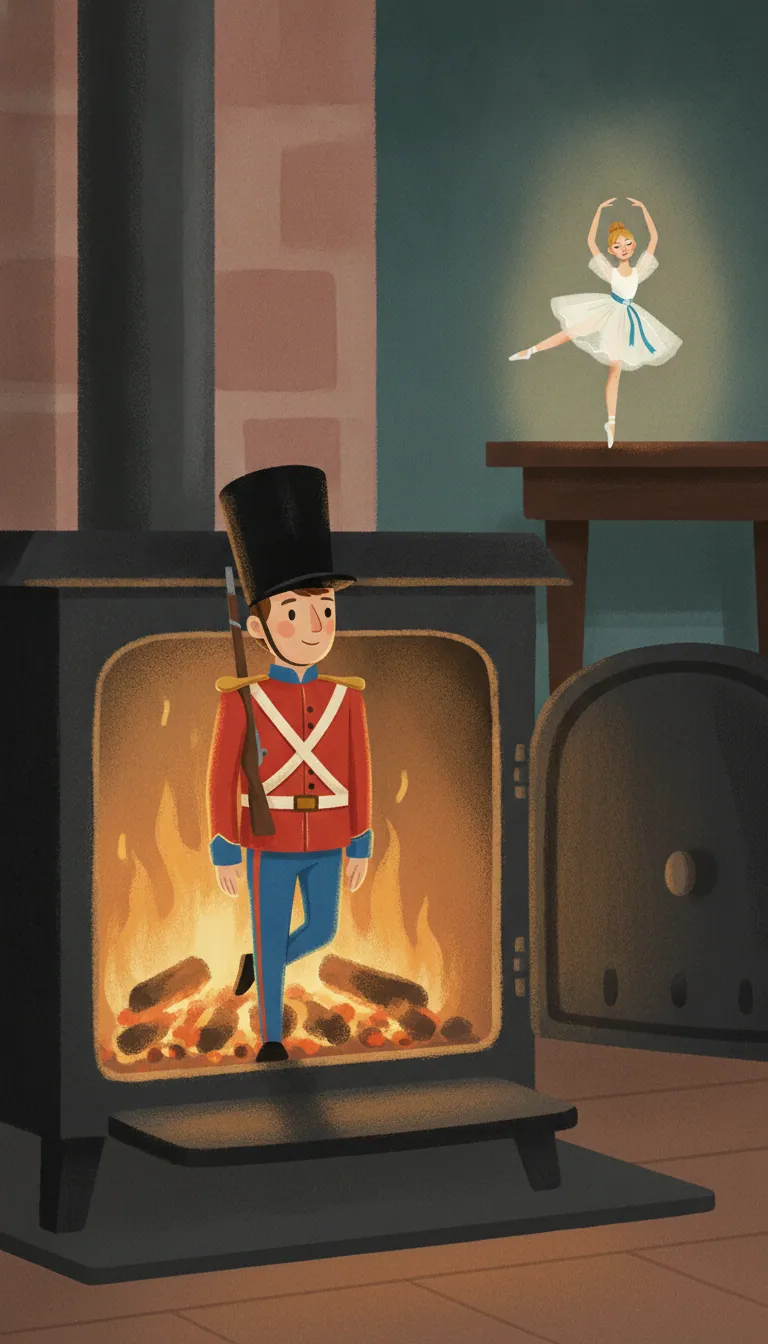
But then one of the boys grabbed the soldier and threw him straight into the stove — for no reason at all. Surely the goblin was to blame again. The fire blazed and the soldier grew terribly hot. His colours faded, and he felt he was melting. Yet he stood upright, musket on his shoulder, and looked at the dancer. She looked at him. And the soldier stood — steadfast to the last.
10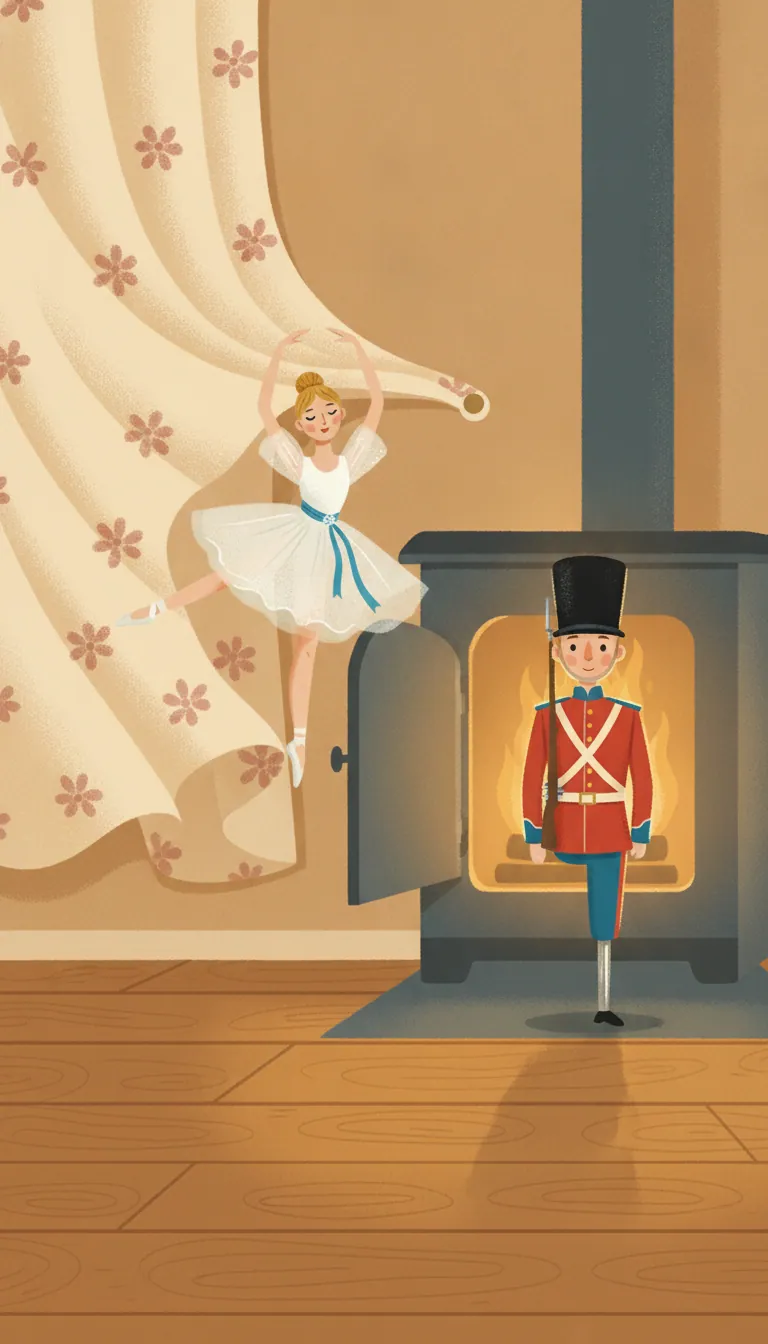
Then the door opened. The draught caught the little dancer and carried her through the air like a snowflake — straight into the stove, to the soldier. In an instant she flared up and was gone. The soldier watched her to the very end. Then, slowly, he melted too: he was no longer a soldier, only a small bright piece of tin lying quietly in the embers.
11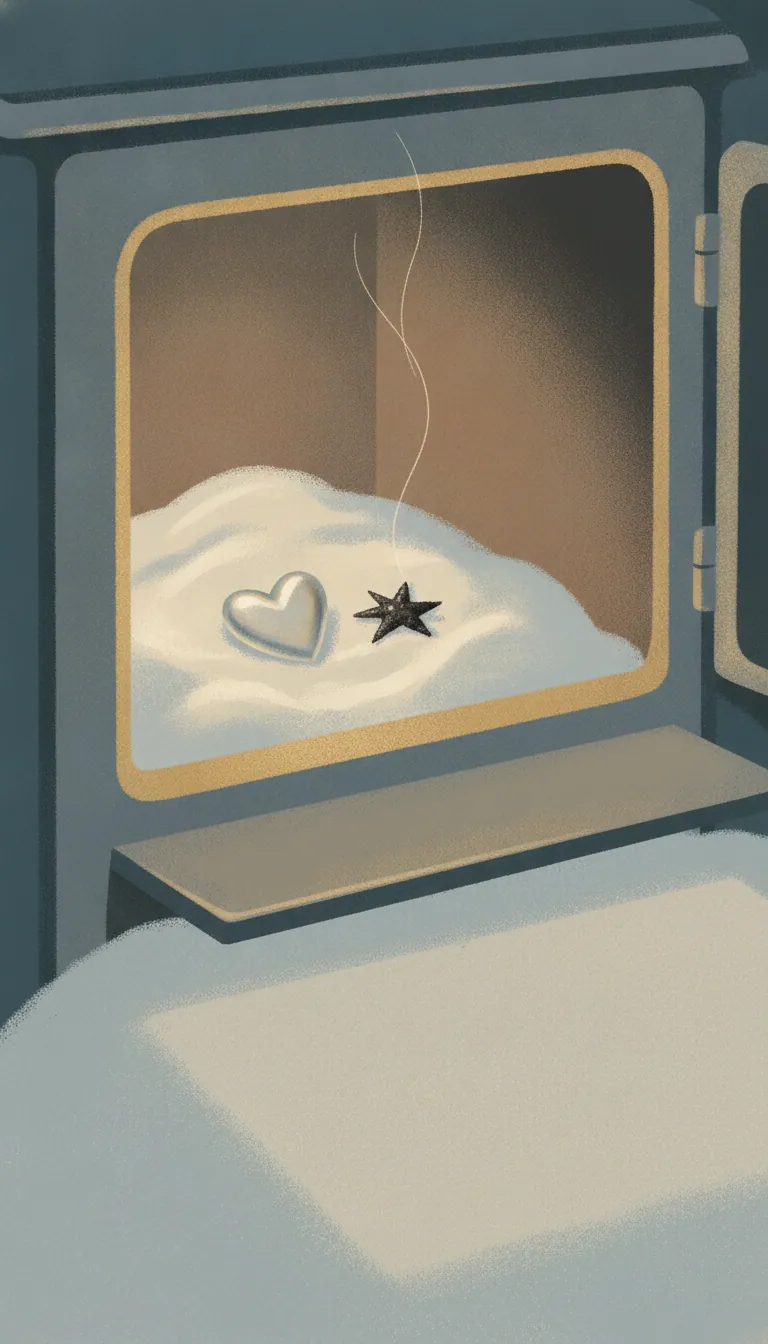
Next morning, when the maid cleared out the ashes, she found something small and shining in them: a little heart of tin. For the soldier had melted into a little tin heart. And of the dancer nothing was left but her spangle — burned black as coal. So in the end they were together after all: the heart and the spangle, quite still, in the warm ashes.
12The End